
Glasscock County Court Records After a Jail Arrest
In Glasscock County, court records after a jail arrest are built around the County and District Clerk rather than a county-run criminal case search page. The official clerk page names Rebecca Batla as County and District Clerk and lists the court-record route through the clerk's office at 209 South Myrl Street in Garden City, mailing address P.O. Box 190, Garden City, TX 79739, and phone 432-354-2371. For county and district court questions, the research also identifies Jonny Gutierrez as the court contact. The District Clerk page states that district court documents are accepted through Texas eFile.
The arrest side and the court side should be checked separately. Custody and booking questions belong with the Glasscock County Sheriff's Office, Sheriff Keith Burnett's published phone line, VINELink, and any receiving facility because Glasscock County is listed as a no-jail county. Formal court records after an arrest are different: they are the filed charges, cause number, bond orders, settings, motions, and disposition maintained by the clerk or court. Use jail inmate records for custody routing and jail mugshots for booking-photo limits, then use the clerk and statewide court tools for the case file.
The official Glasscock County Clerk page is the local starting point for court-record contact information.
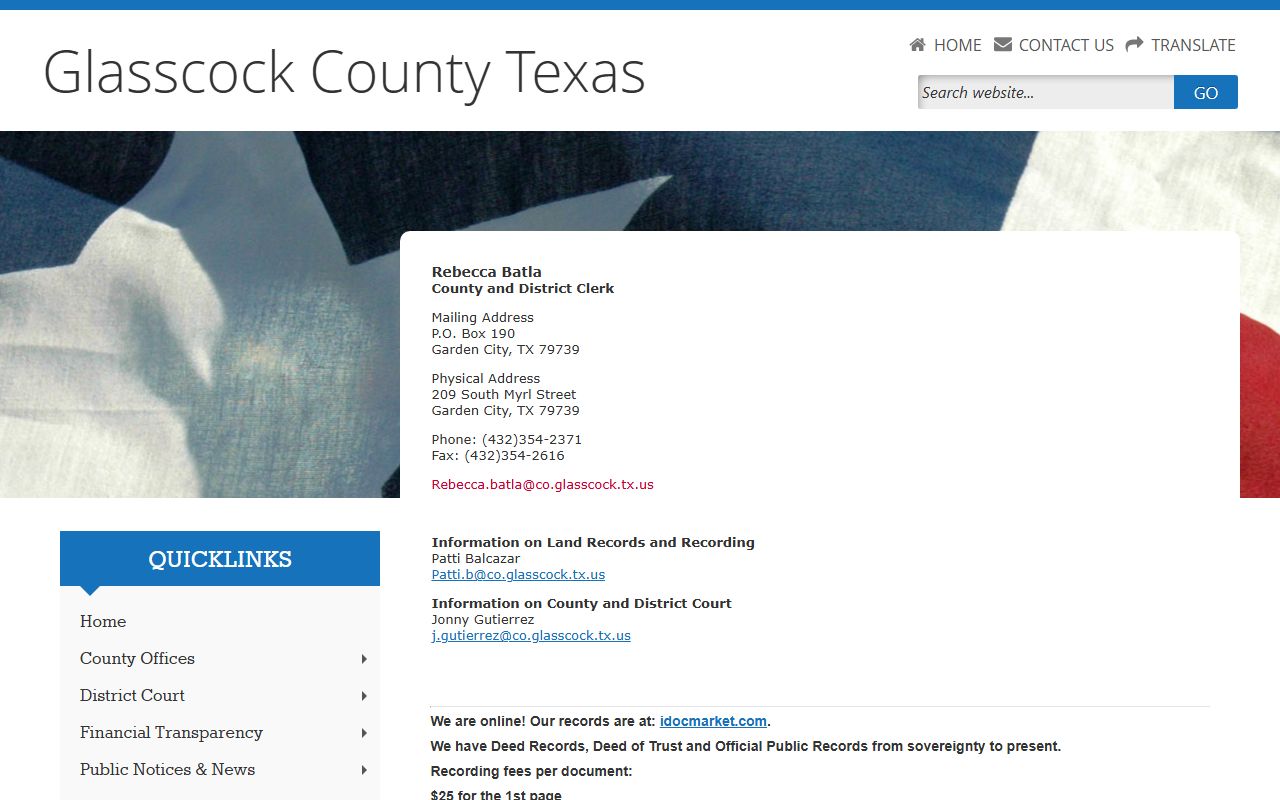
That page matters because Glasscock does not publish a county criminal portal in the research file. When an online search does not answer a court records after arrest question, the clerk contact becomes the practical public route.
How to Find Glasscock County Court Records After an Arrest
Start with the local clerk if the goal is a filed case, not merely custody status. A name, date of birth, approximate arrest date, charge description, bond paperwork, citation, or cause number can help the clerk distinguish one defendant from another. The research does not identify a Glasscock-specific public criminal case portal, so direct clerk contact is important. Statewide access may exist through re:SearchTX, depending on user role, case availability, and the records allowed through that system.
- Check whether the person is still in custody through the sheriff at 432-354-2361 or VINELink, since Glasscock has no local jail roster.
- Contact the County/District Clerk at 432-354-2371 with the defendant name, case number if known, and the court involved.
- Use re:SearchTX for statewide court-record access where the case, court, and account permissions allow it.
- Read each filed charge separately, including its level, cause number, bond orders, next setting, and disposition if the case has ended.
The re:SearchTX portal advertises statewide court access features such as document viewing, hearing information, case tracking, and real-time alerts.
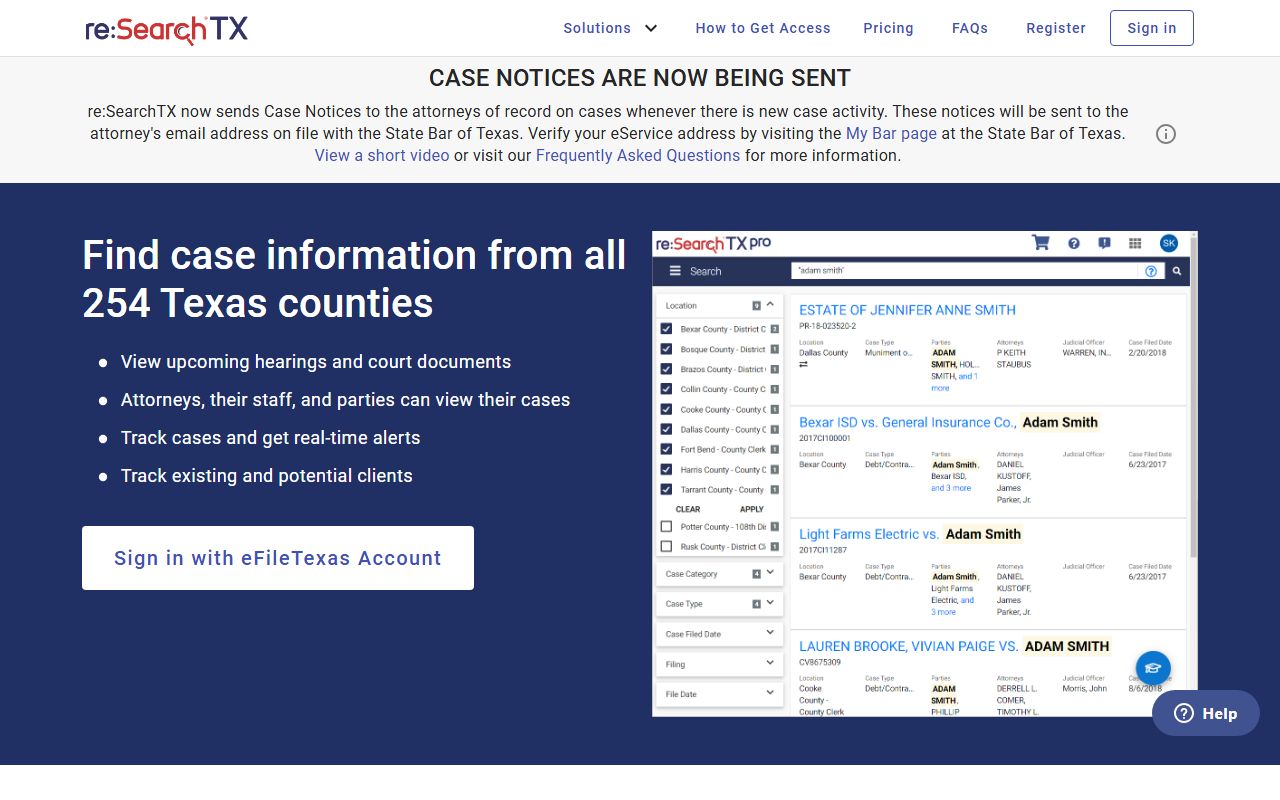
Use re:SearchTX as a supplement, not a substitute for the clerk. If the Glasscock case is not visible, is restricted, or requires a different access level, the clerk's office remains the local record holder for filed court records after an arrest.
| Search Route | Useful Fields | Best Use |
|---|---|---|
| County/District Clerk | Name, cause number, court, approximate arrest date | Local filed charge records, settings, bond orders, and dispositions. |
| re:SearchTX | Account sign-in, party name, case number, court or jurisdiction filter | Statewide court access where the case is available through the portal. |
| DPS Crime Records | Name, sex, race, date of birth, certified-copy choice | State criminal history searches for public conviction and deferred-adjudication records. |
| Sheriff / VINELink | Full name, date of birth, arrest date, custody location if known | Current custody status after an arrest, not the complete court file. |
How Charges Get Filed After an Arrest: Complaint, Information, and Indictment
A Glasscock County arrest begins with law-enforcement custody and reports. Article 15.17 of the Texas Code of Criminal Procedure controls the early magistrate warning, including rights and bail-related procedures. After that first custody stage, the prosecutor reviews the reports and decides what charge or charges to pursue. The official District Attorney page names Joshua Hamby as District Attorney at 312 Scurry, P.O. Drawer 149, Big Spring, Texas 79721, phone 432-264-2220. The filed court records after a jail arrest may be narrower, broader, or differently worded than the booking allegation.
| Complaint | Information | Indictment | |
|---|---|---|---|
| Filed By | Officer or prosecutor, depending on the matter | Prosecutor | Grand jury |
| Common For | Initial misdemeanor or probable-cause allegations | Many misdemeanor prosecutions and some non-indictment paths | Serious felony prosecutions |
| Record Role | Documents the accusation supporting court action | States the prosecutor's formal charge | States the grand jury's formal accusation |
| Why It Matters | May explain the arrest basis | May replace or refine the booking charge | Often controls the felony case going forward |
Charge Status in Court Records After an Arrest
Charge status is one of the most important differences between a booking record and court records after an arrest. A jail or custody entry may show the arrest charge known at intake. The prosecutor may later file a different charge, add counts, amend a charge, reduce a charge, dismiss a count, or proceed to plea and judgment. For Glasscock matters, the clerk or court file is the better source for formal charge status, while the sheriff or VINELink is used for custody status.
| Status | What It Means |
|---|---|
| Pending | The charge has been filed or is moving through court, but no final disposition has been entered. |
| Amended / Reduced | The prosecutor or court record reflects a changed charge, often after review, negotiation, or correction. |
| Dismissed | The court record shows the charge ended without a conviction on that count. |
| Deferred Adjudication | The case is not a straight conviction, but DPS says deferred-adjudication records are public under Texas law. |
| Convicted | The court entered guilt by plea, verdict, or judgment, and sentencing or supervision terms may follow. |
Bond and Release After an Arrest
Bond information may appear in both custody communications and the court file. Texas Code of Criminal Procedure Chapter 17 governs bail, and Article 15.17 is tied to the early magistrate appearance. In practical terms, a person arrested in Glasscock County may receive a bail decision before transfer, after transfer, or through the court handling the case. Because Glasscock has no rated county jail, do not assume there is a local bond window or jail lobby. Verify the custody location first, then confirm the bond order with the court or facility handling release.
| Bond Type | How It Works |
|---|---|
| Cash Bond | The required amount is posted directly as allowed by the court or holding facility. |
| Surety Bond | A licensed bonding company posts bond under the court's conditions and local processing rules. |
| PR / Own Recognizance | The person is released on a promise to appear and must follow any court conditions. |
| No-Bond Hold | Release may be unavailable because of a court order, warrant, detainer, probation matter, federal hold, or immigration hold. |
The Texas bail chapter is the statewide legal framework behind bond decisions after arrest.
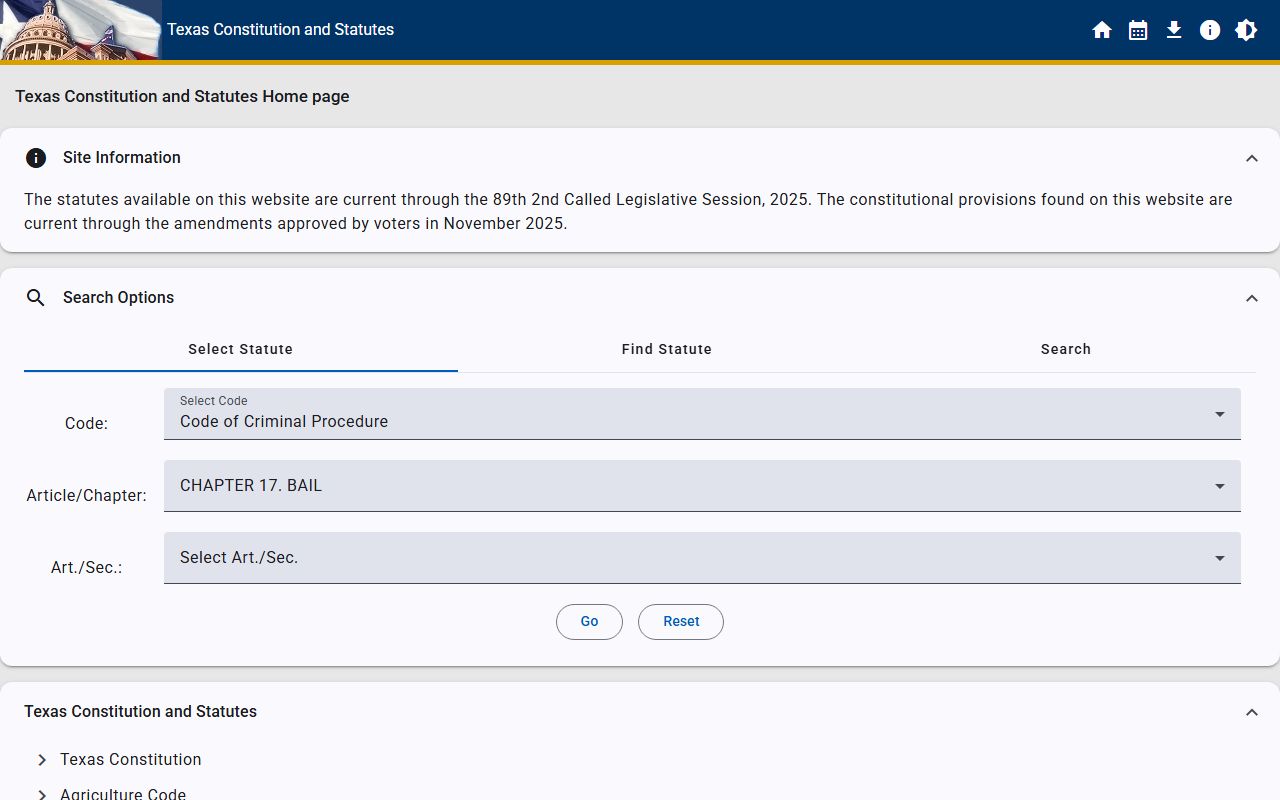
When a bond amount appears in a court record, confirm whether another hold exists before assuming release will occur after payment.
Warrants That Lead to an Arrest
No official Glasscock County active warrant search page was located in the research. The sheriff page does not publish a warrant list, most-wanted page, or warrant division phone line. If an arrest followed a warrant, the public route is direct verification through the sheriff at 432-354-2361 or the court that issued the warrant. The County/District Clerk can help with court records tied to a warrant, capias, bond forfeiture, or failure to appear. VINELink may show custody after a warrant arrest, but it is not a warrant-clearance system.
Do not treat a statewide criminal-history result as proof that a warrant is active or cleared. DPS history may show public conviction or deferred-adjudication records. Warrant status is controlled by the issuing court or agency. A person dealing with a possible warrant should ask whether a court date can be reset, whether bond can be posted, whether counsel should appear first, and whether a recall order is required.
Charges vs. Convictions
Being arrested and charged is not the same as being convicted. Court records after a jail arrest may show accusations that were later changed, dismissed, deferred, or resolved by plea. The safest reading is chronological: arrest allegation, prosecutor-filed charge, later amendments, and final disposition. That sequence matters for employment, licensing, housing, immigration, and personal decision-making, even though this site cannot be used for FCRA-covered screening.
| Charge | Conviction | |
|---|---|---|
| Stage | Accusation after arrest or prosecutor review | Final guilt finding by plea, verdict, or judgment |
| Proof Level | Probable cause or formal allegation | Beyond a reasonable doubt or admitted guilt |
| Can Change? | Yes, charges can be amended, reduced, added, or dismissed | Changes usually require later court action or appeal-related relief |
| Best Source | Clerk/court file and prosecutor filings | Final court disposition and DPS criminal-history records where applicable |
Sealed vs. Expunged Arrest Records
Texas public-record access is broad, but not every record remains public forever. Texas Code of Criminal Procedure Chapter 55A governs expunction of qualifying arrest records. Sealing and nondisclosure concepts can also limit public visibility in eligible situations. A dismissal does not automatically mean every arrest, booking, or court reference disappears from public systems. The proper next step is to review eligibility with the court record, final disposition, and Texas law, then file the correct request in the court with authority to grant relief.
| Sealed / Nondisclosed | Expunged | |
|---|---|---|
| Public Visibility | Hidden or limited for many public searches | Removed or treated as not existing for qualifying purposes |
| Government Access | Some agencies may retain limited legal access | Access is far more limited after an expunction order |
| Eligibility | Depends on disposition, charge, waiting periods, and statutory criteria | Depends on Chapter 55A and the specific arrest outcome |
| Local Record Holders | Court, clerk, sheriff, DPS, and other agencies may need notice | Orders may direct multiple agencies to remove or return records |
Background Check Considerations
Texas DPS Crime Records provides statewide criminal-history access, including the Criminal History Conviction Name Search. The research notes that DPS says deferred adjudication and conviction records are considered public information and may be available to the general public. DPS form CR-42 lists a $10 fee for each paper public criminal-history search, payable by check or U.S. money order, and asks for identifying fields such as name, sex, race, date of birth, certified-copy choice, and mailing address.
The Texas DPS Crime Records page is the statewide path for criminal-history services, separate from Glasscock County clerk records.
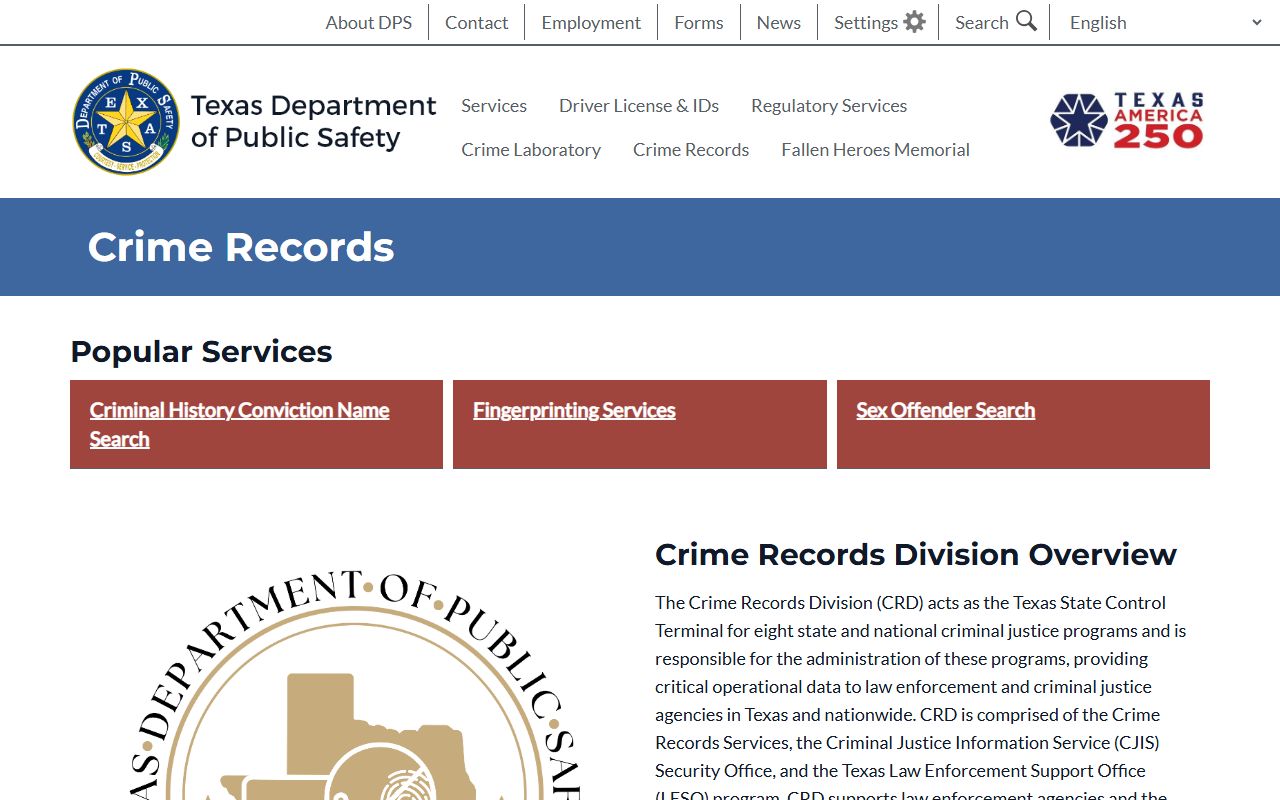
DPS history is useful for statewide conviction and deferred-adjudication checks, but it does not replace the local court file when someone needs the exact charging document, hearing date, bond order, dismissal language, or sealed-record status.
Important: This privately operated site is not a consumer reporting agency and may not be used for FCRA-covered decisions.
Restricted Court Records After an Arrest in Glasscock County
Texas Government Code Chapter 552, the Texas Public Information Act, gives the public access to government records unless an exception or confidentiality law applies. Local Government Code Chapter 201 brings local government records into that public-record framework. Still, access can be limited by pending investigations, juvenile confidentiality, sealed or expunged records, protected victim information, medical or mental-health details, and court orders. If a Glasscock County court record is not released, ask the record holder whether the issue is no record found, restricted access, wrong office, or an Attorney General ruling process.
For court records after an arrest, the cleanest path is to verify the originating office: the sheriff for law-enforcement and custody records, the County/District Clerk for filed court cases, the District Attorney or County Attorney for prosecutorial context when appropriate, TDCJ for sentenced state-prison custody, BOP for sentenced federal custody, and ICE for immigration detention. Each system answers a different question.